

The complete guide
How to Choose and Use a Latex Lumbar Pillow
The gap nobody designs for
Sit back in almost any chair and run your hand behind your lower back. There is a gap there. Your spine curves inward just above your hips, and the chair back is usually a flat or gently curved panel that does not follow that shape at all. Same story in bed when you prop up against a headboard to read, and the same again in most car seats.
For a few minutes it does not matter. After an hour it does. You start shifting, sliding down, crossing and uncrossing your legs, and eventually jamming a folded jumper behind you because something is better than nothing. That improvised jumper is the honest version of what a lumbar cushion does. The difference is that a proper lumbar cushion holds a consistent shape, stays where you put it, and does not need re-folding every ten minutes.
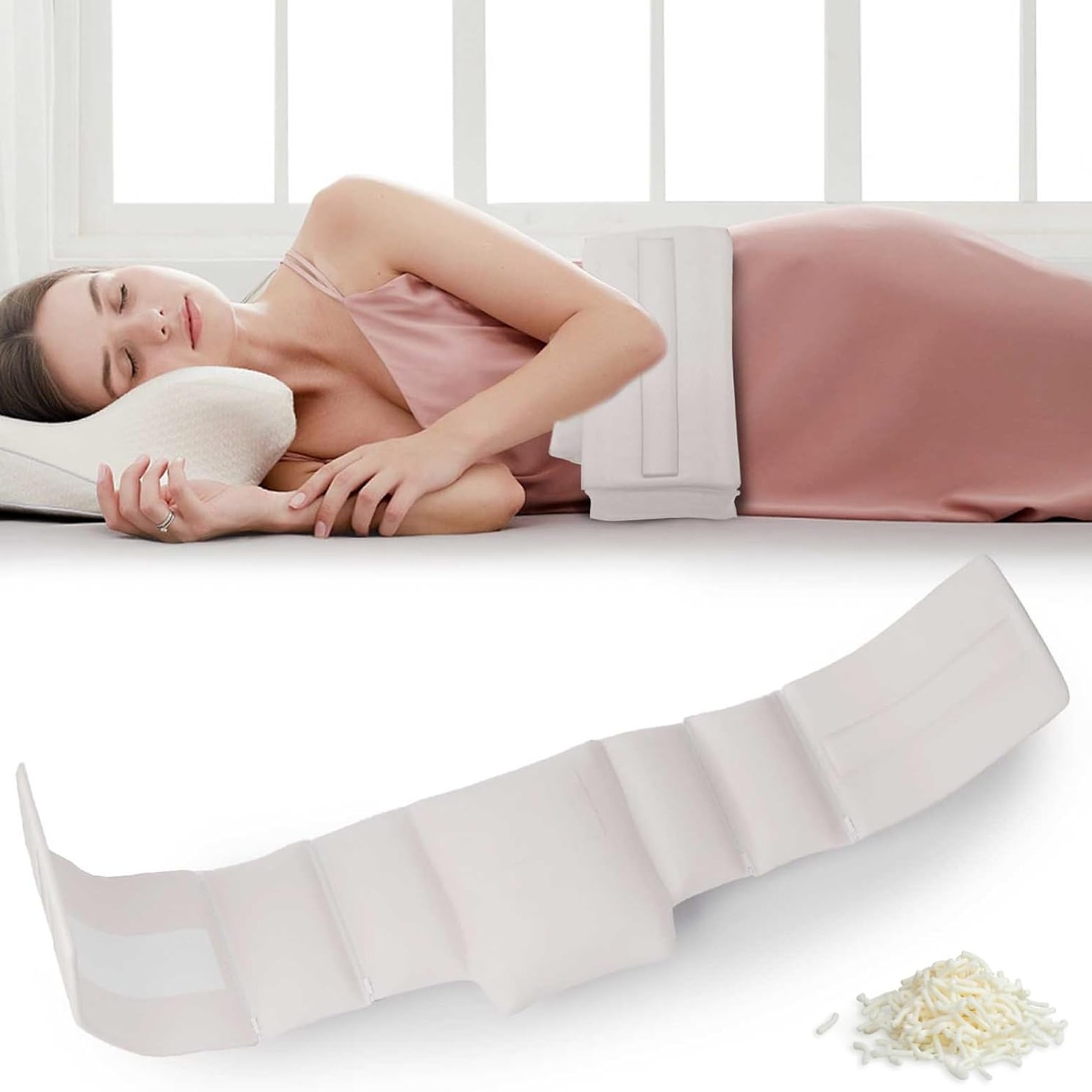
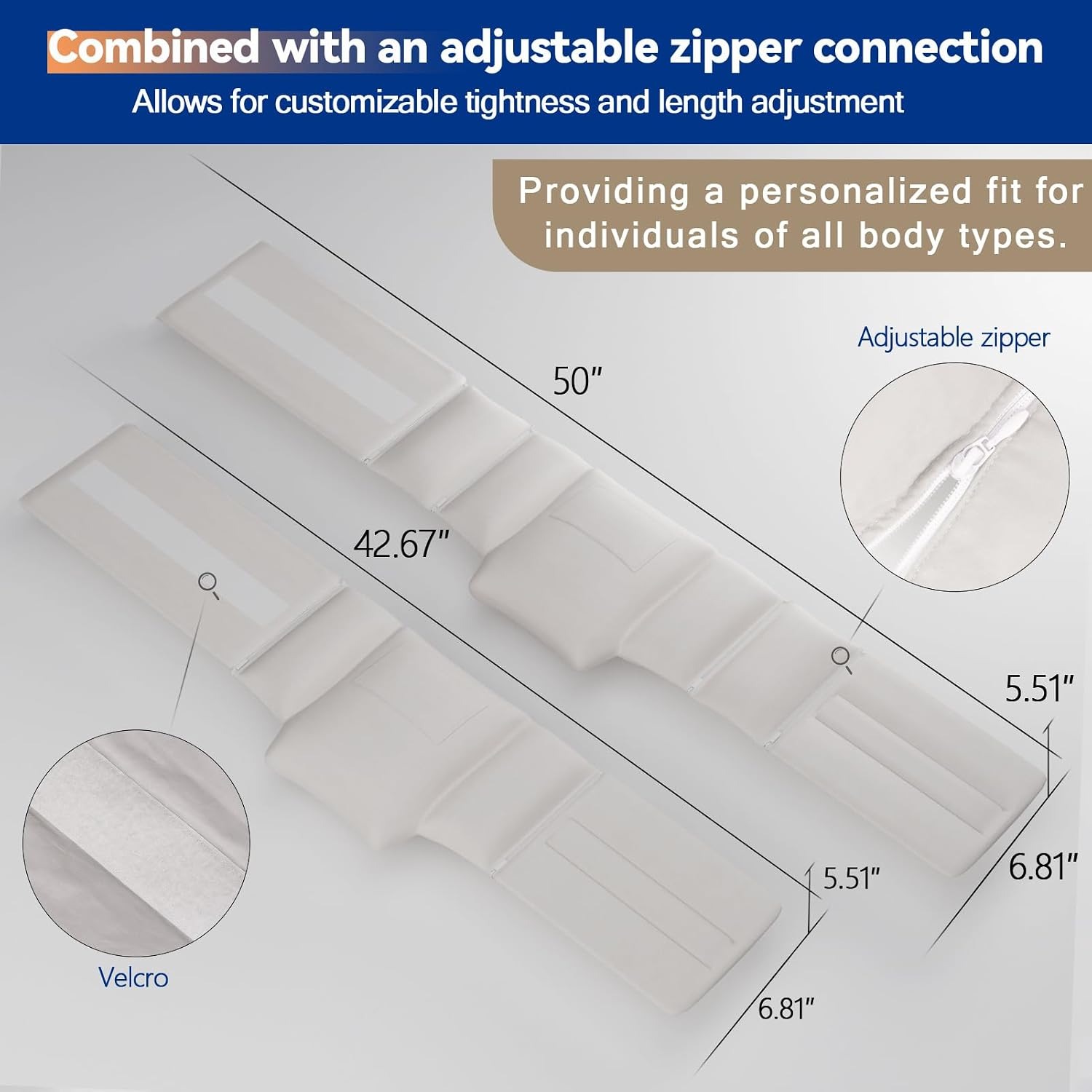
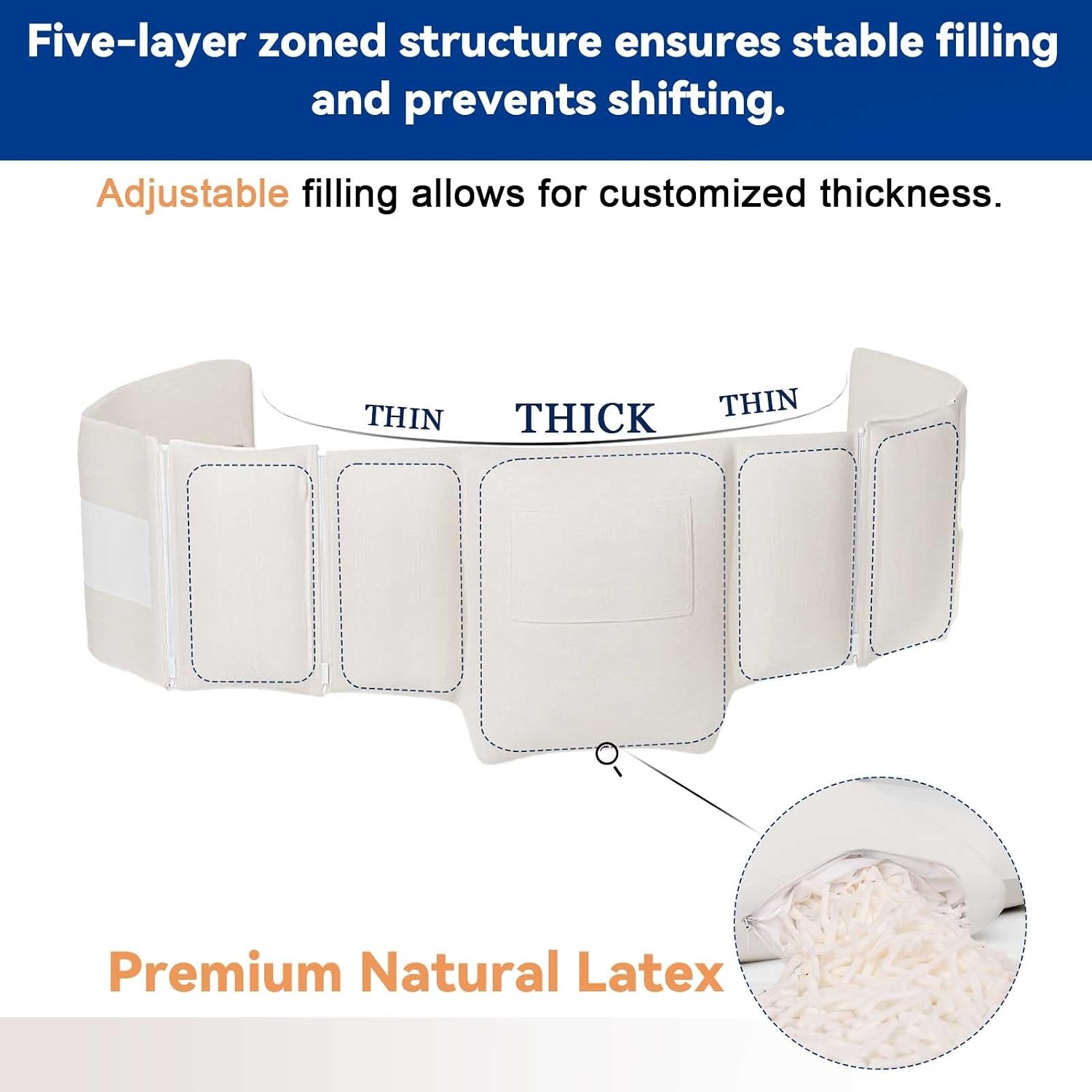
This one is a plain rectangle in light gray, filled with natural latex, wrapped in a cotton cover you can take off and wash. The interesting part is that the fill comes in three sections you can adjust.
Why the fill material changes everything
Most cheap back cushions are stuffed with polyester fibre. They feel lovely in the shop. Two weeks later they are a flat pad with a lump at one end, because fibre compresses and does not come back.
Latex works differently. It has natural bounce. Press it and it pushes back, lift off and it returns to shape. For a cushion whose entire job is to occupy a gap, that resilience is the whole point. A support cushion that flattens under pressure is not supporting anything, it is just sitting there.
Latex also breathes reasonably well, which matters when a cushion is pressed between your back and a chair for a whole working day. Combined with a cotton cover, it handles warmth better than a solid block of synthetic foam in a slick polyester case. It will still warm up. Anything pinned against your body does. But it is a better starting point.
There is one firm rule with latex, and it applies to every product in this category: if you have a diagnosed latex allergy, do not use it. There is no workaround involving the cover. Pick a different material.
The three-section fill, and why it matters
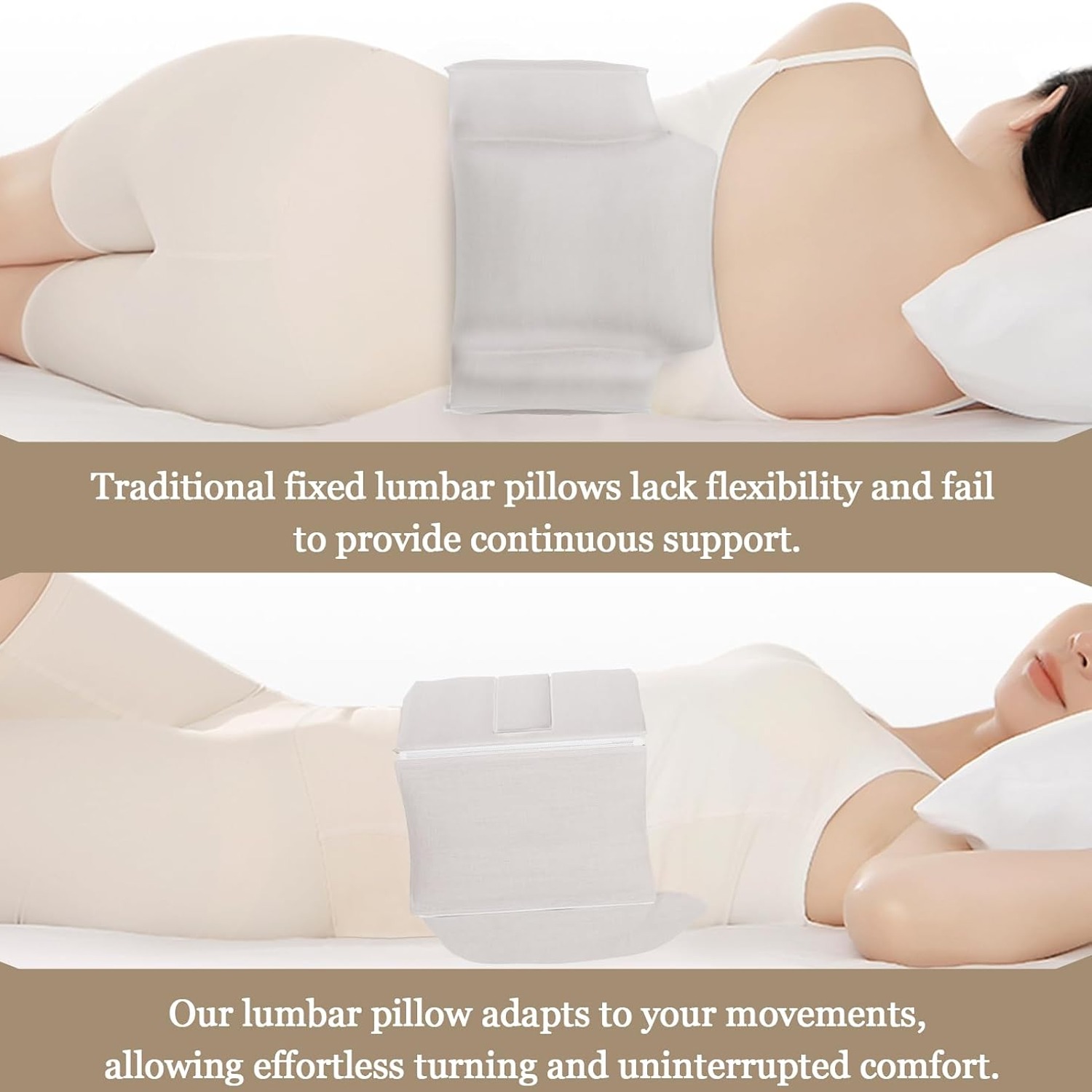
Fixed-shape back cushions have a basic problem. They are designed around an average person in an average chair, and almost nobody is that. If the cushion is 2 cm thicker than the gap in your back, it does not support you, it pushes you forward and makes the chair worse. If it is 2 cm thinner, you barely notice it is there.
Splitting the fill into three sections solves this in the simplest way possible. You can open a section and take latex out until the profile sits right against your back. You can move fill between sections so the cushion is thicker in the middle and tapers at the edges, or the other way round if that suits your chair. It turns one product into a range of profiles.
The practical advice here is to go slowly. Remove a small amount, use the cushion for a few days, then decide. Your back adapts over the first week, and a cushion that felt too firm on day one often feels about right by day five. Keep any removed fill in a sealed bag so you can put it back.
Who it suits
Desk workers are the obvious group. If you sit in the same chair for six or eight hours and your chair has a flat back or weak built-in lumbar shaping, a cushion fills the gap the chair leaves. The straps matter here, because an unsecured cushion on an office chair migrates downward every time you stand up.
Drivers are the second group. Car seats vary enormously, and a lot of them put you in a slightly slumped position that is fine for twenty minutes and tiring after two hours. A cushion can change the angle you sit at. Test it parked before you rely on it for a long trip, and make sure it does not interfere with how you reach the pedals or the wheel.
Then there are people who read or watch television propped up in bed. The listed recommended use for this cushion is sleeping, so bed use is squarely in scope. Some people also lay it flat and tuck it under the waist when lying on their side, filling the gap between the ribs and the hip. Whether that works for you depends on your mattress and your build, so start with less fill rather than more.
It is listed as an adult product. It is not for cots, toddlers or babies.
Choosing between options
If you are comparing lumbar cushions, a few things separate the useful ones from the ones that end up in a cupboard.
Adjustability is first. A fixed cushion is a gamble on your body shape. An adjustable back cushion lets you correct a bad guess instead of returning the product.
Fill material is second. Resilient fills like latex hold their profile. Fibre fills generally do not.
The cover is third, and it is more important than people expect. A removable cotton cover means you can actually keep the thing clean. Cushions that sit against skin and clothing get grubby, and a cushion you cannot wash becomes a cushion you quietly stop using.
Fourth, check how it stays in place. Straps that are both adjustable and removable give you the choice. Use them on a chair, take them off in bed.
One thing worth saying plainly: a lumbar cushion is a comfort accessory. It changes how a chair feels to sit in. If you have ongoing pain or a diagnosed condition, talk to a doctor or physiotherapist. Do not treat a cushion as a medical solution, because it is not one.
Looking after it
The care routine is short. Unzip the cover and wash it on its own, gentle cycle, cool water, then line dry or tumble on low. The latex stays out of the machine entirely. If the fill needs cleaning, wipe it with a barely damp cloth and a little mild soap, then let it dry completely in the shade before the cover goes back on. Damp latex inside a closed cover is asking for trouble.
New latex sometimes has a faint scent. Air it uncovered in a breezy room for a day or two and it generally fades.
When you are not using it, store it flat somewhere dry with air around it. Do not fold it tightly or leave it under a stack of heavy things, and keep it out of direct sunlight and away from heaters, which are hard on latex over time.
The short version
This is an adjustable lumbar support pillow with natural latex fill, a removable cotton cover, three sections of fill you can change, and removable straps to hold it on a chair or seat. It is light gray, rectangular, sold as a single unit and intended for adults.
Buy it if you spend long stretches sitting or propped up and you keep reaching for a folded towel. Adjust the fill over the first week rather than judging it on day one. Wash the cover, never the latex. And if you have a diagnosed latex allergy, this is not the cushion for you.